- 0
- 1,802 word
Threatening someone can be a serious legal matter in the United States. Depending on the words used, the circumstances, the speaker’s conduct, and the applicable state or federal law, a threat may result in criminal charges, a protective order, or other legal consequences.
Not every angry statement is automatically a criminal threat. U.S. law also protects a significant amount of speech under the First Amendment. Courts therefore look at the context and whether a statement qualifies as a legally punishable threat.
This article explains what threatening someone means under U.S. law, when a threat may be illegal, how online and text-message threats are treated, and what someone can do after receiving a threat.
What Is Considered a Threat?
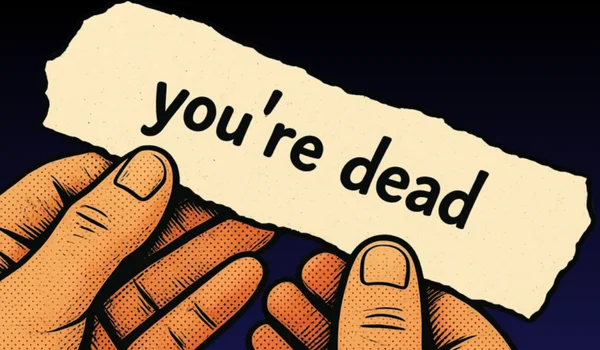
Generally, a threat involves communicating an expression of intended or potential harm toward another person, property, or sometimes a person’s reputation.
A statement can be made:
- In person
- By telephone
- Through text messages
- By email
- On social media
- Through online messaging platforms
- In a letter
- Through another person
The exact definition of a criminal threat depends on the applicable federal or state law.
The U.S. Supreme Court has recognized a category of speech known as “true threats.” These are serious expressions conveying that the speaker means to commit an act of unlawful violence.
Is Threatening Someone Illegal in the United States?
It can be.
There is no single nationwide criminal statute covering every threatening statement. Federal law contains several threat-related offenses, while individual states have their own criminal laws.
For example, federal law makes certain interstate communications containing threats to kidnap or injure another person criminal offenses. Under 18 U.S.C. § 875(c), transmitting such a communication in interstate or foreign commerce can carry a penalty of up to five years in prison.
Other federal statutes address particular types of threats, including threats sent through the mail and threats connected to extortion.
Whether a particular statement is criminal therefore depends on the exact words, context, conduct, jurisdiction, and applicable statute.
What Is a “True Threat”?
The First Amendment does not provide unlimited protection for threats of unlawful violence.
In Counterman v. Colorado (2023), the U.S. Supreme Court discussed the constitutional treatment of true threats. The Court explained that a true threat is a serious expression conveying that the speaker means to commit an act of unlawful violence.
The Court also held that the First Amendment requires the prosecution to establish a subjective mental-state requirement in a true-threat prosecution: the defendant must at least consciously disregard a substantial risk that the communication will be viewed as threatening violence.
This is important because a statement should not automatically become criminal merely because another person finds it offensive, disturbing, or unpleasant.
Examples of Potentially Criminal Threats
Depending on the circumstances and applicable law, statements such as the following may raise serious legal concerns:
- Threatening to kill another person
- Threatening to seriously injure someone
- Threatening to kidnap someone
- Threatening violence against a family member
- Sending a message threatening physical harm
- Making a threat as part of an extortion scheme
- Repeatedly threatening someone as part of stalking or harassment
The surrounding circumstances matter. A court may consider the words used, the context, the relationship between the parties, the method of communication, and other evidence.
Are Text Messages and Online Threats Illegal?
Yes, potentially.
A threat does not have to be spoken face-to-face. Text messages, emails, social media posts, and other electronic communications can potentially form the basis of criminal proceedings.
Federal law specifically addresses certain threatening communications transmitted in interstate or foreign commerce.
The internet can also become relevant to federal stalking laws. For example, 18 U.S.C. § 2261A addresses certain courses of conduct using electronic communication services when the statutory requirements are met, including conduct intended to kill, injure, harass, intimidate, or place another person under surveillance.
However, an angry social media post is not automatically a federal crime. Prosecutors must establish the elements required by the particular statute.
Can a Threat Be Illegal Even If the Person Says It Was a Joke?
Possibly.
Calling something a “joke” does not automatically prevent legal consequences. Courts examine the communication and its circumstances rather than simply accepting the speaker’s characterization.
At the same time, context can matter significantly. The Supreme Court has recognized that statements that do not convey a real possibility of violence may not qualify as true threats.
Therefore, whether a statement was intended as humor, exaggeration, political rhetoric, or a genuine threat can become relevant to the legal analysis.
Does the Person Have to Actually Intend to Carry Out the Threat?
Not necessarily.
A criminal threat does not always require proof that the person actually planned to carry out the threatened act.
The law distinguishes between the existence of a legally recognized threat and whether the speaker has the required mental state under the particular statute.
In Counterman v. Colorado, the Supreme Court explained that the First Amendment requires proof of a subjective mental state in true-threat prosecutions.
The precise requirement can differ depending on the statute involved.
Threatening Someone vs. Harassment
Threats and harassment are related but are not necessarily the same legal offense.
A person may repeatedly contact or harass another person without making an explicit threat. Conversely, a single communication may potentially constitute a criminal threat even without a pattern of repeated conduct.
Federal stalking law, for example, can apply to a course of conduct involving electronic communications when statutory requirements are satisfied.
State laws may separately address:
- Harassment
- Stalking
- Cyberstalking
- Menacing
- Intimidation
- Extortion
- Domestic violence
- Criminal threats
The terminology and penalties vary considerably by state.
What About Threats Made During an Argument?
An argument does not automatically make a threat criminal.
People sometimes make angry or exaggerated statements during heated disputes. Whether such a statement violates the law depends on the applicable statute and circumstances.
Courts can consider the surrounding context when determining whether a communication constitutes a true threat. The Supreme Court’s decisions concerning true threats emphasize that not every harsh or offensive statement qualifies.
However, people should not assume that an angry argument provides legal protection for a genuine threat of violence.
Threats Involving Money or Extortion
Threats can become especially serious when they are used to obtain money, property, or something else of value.
Federal law addresses certain interstate communications involving threats made with intent to extort. Under 18 U.S.C. § 875, specific threats involving injury, kidnapping, property, or reputation can result in federal criminal liability depending on the circumstances.
For example, threatening to injure someone unless they provide money may raise both state and federal legal issues, depending on the facts.
What Should You Do If Someone Threatens You?
If you receive a credible threat, consider taking practical steps to protect yourself.
- Preserve the Evidence
Keep:
- Text messages
- Emails
- Screenshots
- Voicemails
- Social media messages
- Letters
- Call records
- Relevant photographs or recordings
Do not edit or alter the original evidence.
- Avoid Escalating the Situation
If you believe the person may become violent, avoid responding in a way that could increase the danger.
- Report an Immediate Danger
If you reasonably believe that you or another person is in immediate danger, contact local emergency services.
For non-emergency situations, you can consider contacting the appropriate law-enforcement agency and providing the evidence.
- Consider Legal Protection
Depending on the circumstances and state law, a person experiencing threats or stalking may be able to seek a protective or restraining order.
The available procedure varies by state.
- Speak With an Attorney
A lawyer can evaluate the specific statement, evidence, applicable state law, and whether federal law may also be relevant.
What Evidence Can Be Used in a Threat Case?
Potential evidence can include:
- Text messages
- Emails
- Social media posts
- Direct messages
- Voicemails
- Witness statements
- Security-camera footage
- Telephone records
- Other electronic records
- Statements made before or after the alleged threat
The admissibility and importance of particular evidence depend on the case and applicable rules of evidence.
What Are the Penalties for Threatening Someone?
There is no single penalty for threatening someone in the United States.
Potential consequences depend on the specific offense and jurisdiction.
They may include:
- Fines
- Probation
- Protective or restraining orders
- Jail time
- Prison
- Restrictions imposed as part of a criminal sentence
- Additional charges when the threat is connected to stalking, extortion, domestic violence, or another offense
For certain federal interstate communications, 18 U.S.C. § 875(c) provides for imprisonment of up to five years. Other subsections can carry different maximum penalties.
Federal Law vs. State Law
One of the most important points is that threatening someone can involve state law, federal law, or both, depending on the circumstances.
Federal law includes specific offenses involving interstate communications, mailed threats, extortion, stalking, and other conduct.
States independently establish their own criminal statutes. Consequently, the legal definition and punishment for a criminal threat can differ significantly from one state to another.
For a specific case, the relevant state’s law should be reviewed rather than relying only on a general national definition.
Frequently Asked Questions
Is it illegal to threaten someone in the U.S.?
It can be. Criminal liability depends on the applicable federal or state law and the facts surrounding the alleged threat.
Can you be arrested for threatening someone over text?
Yes, potentially. Electronic communications can form the basis of criminal charges when the statutory requirements are satisfied.
Is saying “I will kill you” automatically a crime?
Not necessarily. Courts consider context and applicable legal requirements. A statement must be evaluated to determine whether it constitutes a legally punishable true threat or falls within another criminal statute.
Can a joke be considered a threat?
Potentially. Calling a statement a joke does not automatically resolve the legal question. Context and the applicable legal standard matter.
Can threatening someone online be a federal crime?
It can be under certain circumstances. Federal law covers particular interstate communications and certain electronic conduct, including conduct covered by federal stalking statutes.
What should I do if someone threatens me?
Preserve the evidence, avoid escalating the situation, and contact law enforcement if you believe there is an immediate safety risk. You may also want to consult an attorney about protective orders or other legal options.
Final Takeaway
Threatening someone in the United States can have serious legal consequences, but not every angry, offensive, or exaggerated statement is automatically a criminal threat.
The legal analysis can depend on the exact words used, context, the speaker’s mental state, the intended or reasonably understood meaning of the communication, and the particular federal or state law involved.
The Supreme Court’s decisions on true threats, including Counterman v. Colorado, are particularly important because the First Amendment places constitutional limits on criminalizing threatening speech.
For that reason, anyone dealing with an actual threat should evaluate the specific facts under the law of the relevant state rather than relying on a general definition.
Author

kblog0709@gmail.com
Related Posts

Lawful Homicide: Meaning, Types, Examples & Legal Significance
- 0
- 888 words
Lawful homicide refers to a killing that the law recognizes as legally justified or otherwise not criminally punishable under the circumstances. The...
Read out all
Legal vs Lawful: What Is the Difference in Law?
- 0
- 1,129 word
Legal and lawful are closely related words. Both can describe something that is permitted by law, but they are not always used...
Read out all
Legal Age of Consent in Japan: What the Law Says in 2026
- 0
- 1,392 word
Japan’s laws on sexual consent changed significantly in 2023. The changes raised the national age threshold for sexual consent and introduced additional...
Read out all
Death Threats in the U.S.: Are They Illegal, What to Do, and Possible Penalties (2026)
- 0
- 2,226 words
A death threat is a serious matter in the United States. Depending on the circumstances, making a threat to kill another person...
Read out all
Age of Consent in California: What the Law Says in 2026
- 0
- 1,648 word
The age of consent in California is 18. Under California Penal Code § 261.5, a person under 18 is considered a minor...
Read out all
Age of Consent in Florida: What the Law Says in 2026
- 0
- 1,550 word
The age of consent in Florida is generally 18, but Florida’s sexual-offense laws are more complicated than simply applying one age to...
Read out all