- 0
- 1,163 word
Stop and identify states are U.S. states where certain laws allow police officers to require a person to provide identifying information during a lawful detention, when the legal requirements of the state’s law are satisfied.
However, this does not mean police can always stop anyone and demand identification. The officer generally needs a lawful basis for the detention, and the exact requirements vary by state.
What Is a Stop and Identify Law?
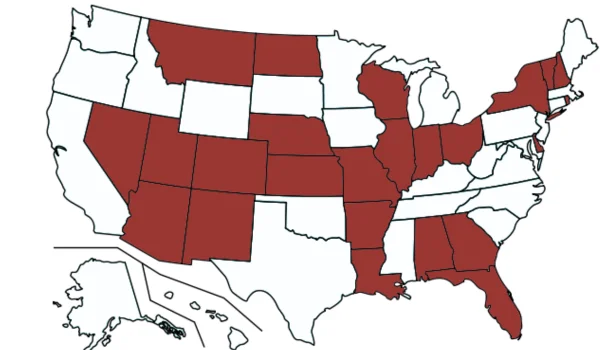
A stop and identify law generally allows law enforcement to require a person who has been lawfully stopped to provide certain identifying information.
The information required can include:
- Name
- Address
- Other identifying information required by state law
Whether a person must provide additional information, such as a physical identification card, depends on the applicable law.
Is It Legal for Police to Ask for Your Name?
Yes.
Police officers can generally ask someone for their name or identification.
The more important question is whether the person is legally required to answer.
A voluntary request for identification is different from a lawful detention under a stop-and-identify statute.
What Is a Lawful Detention?
A police officer generally needs reasonable suspicion of criminal activity to briefly detain someone for investigation under the Fourth Amendment.
The U.S. Supreme Court addressed this principle in Terry v. Ohio.
A lawful investigative stop is commonly called a Terry stop.
How Many Stop and Identify States Are There?
There is no universally agreed number because states have different statutes and courts interpret them differently.
Some states have relatively clear statutes requiring a person to provide identifying information during a lawful stop, while others have narrower laws or no general stop-and-identify requirement.
Examples commonly identified as having stop-and-identify statutes include:
- Alabama
- Arizona
- Colorado
- Delaware
- Florida
- Georgia
- Illinois
- Indiana
- Kansas
- Louisiana
- Missouri
- Montana
- Nebraska
- Nevada
- New Hampshire
- New Mexico
- New York
- North Dakota
- Ohio
- Rhode Island
- Utah
- Vermont
- Wisconsin
Important: This list should not be treated as meaning that police have unlimited authority to demand identification in these states. The specific statutory requirements and court decisions matter.
What Did the Supreme Court Say About Stop and Identify Laws?
The U.S. Supreme Court considered a stop-and-identify law in Hiibel v. Sixth Judicial District Court of Nevada.
In that case, the Court held that Nevada could constitutionally require a person who was lawfully detained based on reasonable suspicion to identify himself when the state’s law applied.
The Court emphasized that the detention itself must be lawful.
Does Refusing to Identify Yourself Mean You Can Be Arrested?
Sometimes.
If a state law legally requires a person to provide identifying information during a lawful detention, refusing to comply can potentially result in criminal consequences.
But if there is no applicable legal requirement to identify yourself, simply refusing a voluntary request may not itself be a crime.
The exact answer depends on:
- State law
- Whether the person was legally detained
- The reason for the stop
- The wording of the applicable statute
- Court decisions interpreting the law
Do You Have to Show Your Driver’s License?
Not necessarily.
There is an important difference between:
“What is your name?”
and
“Show me your physical identification card.”
Some stop-and-identify laws require a person to provide identifying information rather than physically produce an identification document.
However, driving is different. If you are operating a motor vehicle, separate driver’s-license laws generally require drivers to carry and produce a valid license under applicable circumstances.
Stop and Identify vs. Stop and Frisk
These are different concepts.
Stop and Identify
Concerns whether a person must provide identifying information during a lawful detention.
Stop and Frisk
Concerns an officer’s authority to conduct a limited protective pat-down when the officer reasonably believes the person is armed and dangerous.
The two concepts can occur during the same encounter but involve different legal rules.
Can Police Stop You Without Reasonable Suspicion?
Generally, police cannot conduct an ordinary investigative detention without the required legal justification.
The Fourth Amendment generally protects people against unreasonable seizures.
There are exceptions, including certain lawful checkpoints and other circumstances recognized by law.
Simply being in a public place does not automatically give an officer unlimited authority to detain someone.
What If You Are Just Walking Down the Street?
Police can generally approach and speak with people voluntarily.
But a consensual encounter is different from a detention.
If an officer has not legally detained you, you may generally be able to decline to answer questions and leave, assuming no other legal basis prevents you from doing so.
If the officer lawfully detains you under circumstances covered by a stop-and-identify law, different rules may apply.
What If You Are a Passenger in a Car?
Passenger identification requirements can be complicated.
Being a passenger does not automatically give police the same authority they have over the driver for purposes of driver’s-license requirements.
However, an officer may be able to require identification from a passenger in certain circumstances if the passenger is lawfully detained and applicable state law permits it.
Frequently Asked Questions
What are stop and identify states?
They are states with laws that can require a person to provide identifying information to police during certain lawful detentions.
Do police have to tell you why they stopped you?
The requirements vary by jurisdiction and circumstances. A person should not assume that an officer’s failure to explain the reason immediately makes the detention automatically unlawful.
Can you refuse to identify yourself?
It depends on the circumstances and state law. During a lawful detention covered by a stop-and-identify statute, refusing to provide required information can potentially be an offense.
Can police arrest you for refusing to show ID?
Potentially, but it depends on whether the law actually requires identification in that situation. A request to show a physical ID card is not necessarily the same as a legal requirement to provide your name.
Is refusing to answer a police officer always a crime?
No. A person generally does not lose all constitutional rights simply because a police officer asks questions. Whether you must respond depends on the circumstances and applicable law.
Does every state have a stop-and-identify law?
No. States differ significantly in how they regulate identification during police encounters.
Final Takeaway
Stop and identify laws allow police in certain states to require identifying information from a person who is lawfully detained, but these laws do not give police unlimited authority to stop people and demand identification.
The key questions are:
- Was the person lawfully detained?
- Does the state’s stop-and-identify law apply?
- What information does the law require?
- Did the person refuse to provide information that the law actually requires?
The Supreme Court’s decision in Hiibel v. Sixth Judicial District Court of Nevada confirms that a state can, under appropriate circumstances, require a lawfully detained person to identify themselves.
This article provides general legal information and is not legal advice. Stop-and-identify laws vary by state, and the precise facts of a police encounter can significantly change the legal analysis.
Author

kblog0709@gmail.com
Related Posts

Lawful Homicide: Meaning, Types, Examples & Legal Significance
- 0
- 888 words
Lawful homicide refers to a killing that the law recognizes as legally justified or otherwise not criminally punishable under the circumstances. The...
Read out all
Legal vs Lawful: What Is the Difference in Law?
- 0
- 1,129 word
Legal and lawful are closely related words. Both can describe something that is permitted by law, but they are not always used...
Read out all
Legal Age of Consent in Japan: What the Law Says in 2026
- 0
- 1,392 word
Japan’s laws on sexual consent changed significantly in 2023. The changes raised the national age threshold for sexual consent and introduced additional...
Read out all
Is Threatening Someone Illegal: What Is Considered a Threat and Is It Illegal in the U.S.? (2026)
- 0
- 1,802 word
Threatening someone can be a serious legal matter in the United States. Depending on the words used, the circumstances, the speaker’s conduct,...
Read out all
Death Threats in the U.S.: Are They Illegal, What to Do, and Possible Penalties (2026)
- 0
- 2,226 words
A death threat is a serious matter in the United States. Depending on the circumstances, making a threat to kill another person...
Read out all
Age of Consent in California: What the Law Says in 2026
- 0
- 1,648 word
The age of consent in California is 18. Under California Penal Code § 261.5, a person under 18 is considered a minor...
Read out all