- 0
- 1,220 word
The use of force continuum is a framework used by law enforcement agencies to help officers determine what level of force may be appropriate in response to a person’s behavior or threat.
It generally describes a range of police responses, from officer presence and verbal communication to higher levels of physical force. The exact levels are not identical across the United States because individual police departments and states may use different policies.
What Is the Use of Force Continuum?
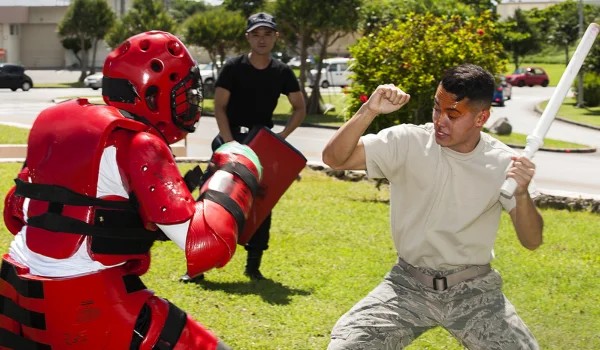
The use of force continuum is designed to help officers respond reasonably and proportionately to changing circumstances.
An officer may consider factors such as:
- The seriousness of the situation
- Whether the person is actively resisting
- Whether the person is attempting to escape
- Whether there is an immediate threat of harm
- The presence of weapons
- The number of people involved
- The physical capabilities of the people involved
- Whether the situation is changing rapidly
The continuum is not necessarily a fixed step-by-step ladder. An officer may sometimes need to move from a lower level of response to a higher level very quickly when circumstances change.
Common Levels of the Use of Force Continuum
Different agencies use different terminology, but a traditional continuum may include the following levels.
- Officer Presence
The lowest level is often simply the presence of a law enforcement officer.
An officer’s uniform, marked vehicle, or physical presence may be enough to obtain compliance.
Example: An officer arrives at a disturbance, and the people involved stop arguing after seeing the officer.
- Verbal Commands
Officers may use verbal communication to give instructions, warnings, or commands.
Examples include:
- “Step back.”
- “Put your hands where I can see them.”
- “Stop.”
- “Please leave the area.”
Communication and de-escalation can sometimes resolve a situation without physical force.
- Empty-Hand Control
If verbal commands do not resolve the situation, an officer may use physical techniques to control a person, depending on the circumstances and department policy.
This can include:
- Holding
- Restraining
- Escorting
- Handcuffing
- Other approved control techniques
The amount of force used should generally correspond to the circumstances and applicable law.
- Less-Lethal Options
Some traditional continuums include less-lethal tools at a higher level of force.
Depending on department policy, these may include:
- Pepper spray
- Conducted-energy devices such as Tasers
- Impact weapons
- Other approved less-lethal equipment
“Less-lethal” does not mean completely harmless. These tools can cause serious injury or, in rare circumstances, death.
- Deadly Force
Deadly force represents the highest level of force.
Deadly force can include force that is intended or reasonably likely to cause death or serious bodily injury.
In the United States, constitutional standards generally require that the use of deadly force by police be objectively reasonable under the circumstances. The specific facts of the incident are critical.
Does an Officer Have to Follow Every Level?
No, not necessarily.
One common misconception is that police officers must always progress through every level of the continuum.
A traditional continuum is better understood as a guide to proportional responses, not necessarily a requirement that officers use every lower level before moving to a higher one.
For example, if an officer reasonably faces an immediate deadly threat, the officer does not necessarily have to attempt verbal commands, physical control, and less-lethal methods first.
Can Police Use Force Against Someone Who Is Not Resisting?
Police authority to use force depends on the circumstances.
The fact that someone is not actively resisting does not automatically make every use of force unlawful, nor does it automatically make force lawful.
Courts generally examine the totality of the circumstances.
Important considerations can include:
- Whether the person posed a threat
- Whether the person was suspected of a serious offense
- Whether the person was attempting to flee
- Whether the person was resisting
- How much force was used
- Whether the situation was changing
- Whether the force was necessary under the circumstances
What Is Excessive Force?
Excessive force generally refers to force that is unreasonable under the circumstances.
For police officers, the U.S. Supreme Court has held that claims of excessive force during an arrest or other seizure are generally evaluated under the Fourth Amendment’s objective-reasonableness standard.
The Supreme Court’s decision in Graham v. Connor established that courts should evaluate the reasonableness of the force from the perspective of a reasonable officer at the scene, considering the circumstances confronting the officer at the time.
Use of Force and the Fourth Amendment
The Fourth Amendment protects people against unreasonable searches and seizures.
When police use physical force to seize a person, courts may examine whether the force was objectively reasonable under the circumstances.
Factors considered under the Graham v. Connor framework include:
- The severity of the suspected offense
- Whether the person posed an immediate threat to officers or others
- Whether the person was actively resisting or attempting to evade arrest
The analysis focuses on the circumstances known to the officer at the time rather than relying solely on information discovered afterward.
Is the Use of Force Continuum a Federal Law?
No.
There is no single nationwide federal law establishing one mandatory use-of-force continuum for every police department in the United States.
Individual agencies may establish their own policies, training standards, and reporting requirements.
Federal law and constitutional standards still place legal limits on police use of force.
Why Do Police Departments Use a Use of Force Continuum?
A continuum can help agencies:
- Train officers
- Establish expectations
- Promote de-escalation
- Evaluate incidents
- Review officer conduct
- Develop departmental policies
- Explain different levels of force
However, modern police policies increasingly emphasize reasonableness, de-escalation, necessity, and proportionality rather than treating force as a simple linear ladder.
Frequently Asked Questions
What is the use of force continuum?
It is a framework describing different levels of police response, generally ranging from officer presence and verbal commands to physical force and deadly force.
What are the five levels of the use of force continuum?
A traditional model may include officer presence, verbal commands, empty-hand control, less-lethal options, and deadly force. However, agencies may use different models.
Do police have to use the lowest level of force first?
Not always. The appropriate response depends on the circumstances. A rapidly developing threat may require a higher level of force without going through every lower level.
What is excessive force?
Excessive force is generally force that is objectively unreasonable under the circumstances.
Is the use of force continuum federal law?
No. Police agencies generally establish their own use-of-force policies, although constitutional law places important limits on police use of force.
Can police use deadly force?
Police may use deadly force only when legally justified. Under the constitutional standard applicable to police seizures, the question generally involves whether the use of force was objectively reasonable given the circumstances.
Final Takeaway
The use of force continuum is a framework used by law enforcement to understand and regulate different levels of force.
A traditional continuum may move from:
Officer presence → Verbal commands → Physical control → Less-lethal force → Deadly force
However, officers generally do not have to move through every level in order. The appropriate response depends on the circumstances, the threat presented, applicable law, and the officer’s agency policy.
In excessive-force cases, courts generally examine whether the officer’s actions were objectively reasonable under the totality of the circumstances.
This article provides general legal information and is not legal advice. Use-of-force policies vary among law-enforcement agencies and jurisdictions.
Author

kblog0709@gmail.com
Related Posts

Lawful Homicide: Meaning, Types, Examples & Legal Significance
- 0
- 888 words
Lawful homicide refers to a killing that the law recognizes as legally justified or otherwise not criminally punishable under the circumstances. The...
Read out all
Legal vs Lawful: What Is the Difference in Law?
- 0
- 1,129 word
Legal and lawful are closely related words. Both can describe something that is permitted by law, but they are not always used...
Read out all
Legal Age of Consent in Japan: What the Law Says in 2026
- 0
- 1,392 word
Japan’s laws on sexual consent changed significantly in 2023. The changes raised the national age threshold for sexual consent and introduced additional...
Read out all
Is Threatening Someone Illegal: What Is Considered a Threat and Is It Illegal in the U.S.? (2026)
- 0
- 1,802 word
Threatening someone can be a serious legal matter in the United States. Depending on the words used, the circumstances, the speaker’s conduct,...
Read out all
Death Threats in the U.S.: Are They Illegal, What to Do, and Possible Penalties (2026)
- 0
- 2,226 words
A death threat is a serious matter in the United States. Depending on the circumstances, making a threat to kill another person...
Read out all
Age of Consent in California: What the Law Says in 2026
- 0
- 1,648 word
The age of consent in California is 18. Under California Penal Code § 261.5, a person under 18 is considered a minor...
Read out all